Identifying Wildlife Damage to Trees, Shrubs, & Bushes
Where is the damage occurring?
| On the trunk? | On the branches? |
On the trunk:
| Bears: Bears can scrape bark in search of sap and insects. Some markings may also have a territorial significance. | |
| Beavers: They can strip the bark to a standing height of less than 6 feet. Look closely for large scrape marks created by their teeth. These marks will help distinguish the damage from voles. Also voles tend to debark thinner trees. Beavers can also cut down trees. | 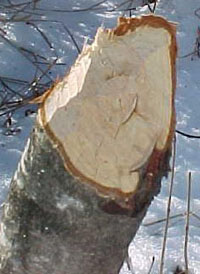 |
| Deer: Bucks will rub small trees (approximately 4 ft high) and bushes damaging branches and trunk. | 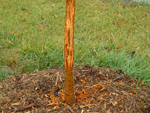 |
| Feral hogs: Feral hogs can rub against trees to scrape the mud off. Typically this damage will be less than 4 feet high. | |
| Porucpines: Often, porcupine damage is high up in the tree and focuses on trunk bark and branches. Damage typically occurs during the night. | |
| Rabbits: Rabbits will girdle the trunk of trees (usually smooth-barked trees) as high as they can reach. Remember that snow cover can raise their elevation and therefore extend the height of their gnawing during winter. |  |
| Tree squirrels: Squirrels strip bark on the trunk or the branches. Damage typically occurs in late winter or early spring. For more details about squirrel bark stripping click here. |  |
| Voles: Voles will girdle trees, particularly during harsh winters when food is scarce. | |
| Woodpeckers: This flicker's nesting cavity is a good example of the damage that can occur to trees by woodpeckers. |  |
On the branches:
| Deer: Bucks will rub small shrubs (approximately 4 ft high) and bushes damaging branches and trunk. Deer will browse on tree branches and shrubs to a height of around 6 feet. Deer browse can be distinguished from rabbit damage by both the height of the cutting and the lack of a clean 45-degree cut. |  |
| Porcupines: Porcupine damage usually is high in the tree on the trunk bark and branches. | |
| Tree squirrels: Squirrels can clip the ends of tree branches and cause an extensive amount of damage as shown by the large quantity of evergreen clippings that have fallen to the ground. Squirrels can also strip bark on the trunk or the branches. Damage will typically occur in late winter or early spring. A critical sign will be the presence of small (1/2-inch) remnants of bark found below the branches that have been stripped. These remnants are a key difference between branches damaged by porcupines and those damaged by tree squirrels. |  |